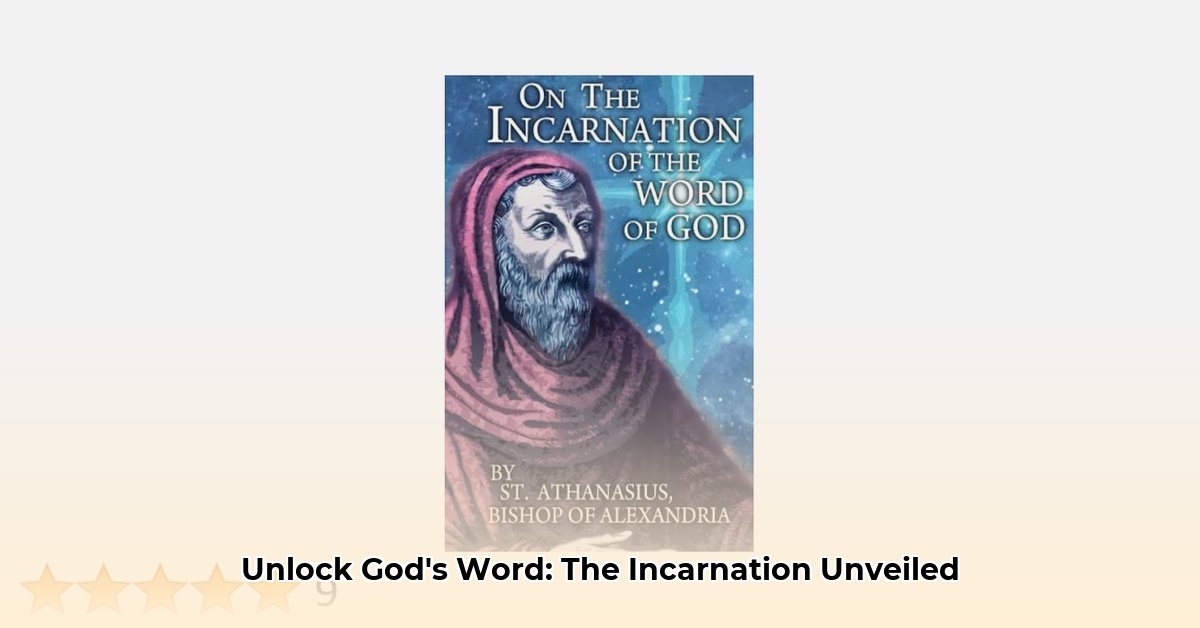
Incarnation of God's Word: Unpacking the Divine Mystery
The Incarnation—God becoming human—is a cornerstone of Christian belief, a concept both awe-inspiring and profoundly challenging. How could an omnipotent, eternal being become a person like us? This central mystery has spurred centuries of theological reflection, offering diverse yet complementary perspectives. Understanding the Incarnation requires exploring both its "why" and its "how." Why did God choose this path? How was such a seemingly impossible event possible? For further insight into Jesus as the Word, see this helpful resource.
Imagine the sheer scale of creation: a universe bursting forth from nothingness. This incredible act of divine power, as suggested by early Church Father Macarius, hints at the boundless capacity of God, making the Incarnation, though seemingly paradoxical, more comprehensible. If God could create the universe ex nihilo, then becoming human, while extraordinary, falls within the realm of possibility. It's akin to a master sculptor who, having crafted monumental works, is equally capable of creating a delicate and intricate miniature.
However, focusing solely on the “how” misses the profoundly personal aspect. Many devotional reflections emphasize the "why"—God's desire for a deep, personal relationship with humanity. The Incarnation, through Jesus Christ, who is both fully God and fully human, provides the ultimate bridge between the divine and human realms. It's a powerful image of a loving parent reaching down to lift a fallen child, an act of both immense cosmic significance and deeply personal intimacy.
Different Views, Shared Ground
While different theological perspectives emphasize various aspects, they converge on the Incarnation's crucial role in salvation. Both Macarius' cosmic perspective and devotional approaches acknowledge that the gap between humanity and a holy God was insurmountable through human effort alone. The Incarnation, therefore, was a necessary divine intervention, an ultimate act of grace.
These perspectives, far from being contradictory, complement each other. Macarius' approach offers a systematic, almost philosophical, argument, building upon the sheer scale of creation to establish the possibility of Incarnation. The devotional approach, conversely, focuses on the practical implications and personal relationship implications of this event. Together, they provide a holistic understanding of the Incarnation.
The "Why" and the "How" of God's Action
The necessity of the Incarnation stems from the vast chasm between humanity and God. Our imperfections, failings, and intrinsic inability to reach God independently necessitated a radical act of divine love and grace. The Incarnation, therefore, wasn't a mere historical event; it's a living reality, continuing to shape faith and spiritual lives throughout history. Isn't it remarkable to consider that this central Christian belief has transcended centuries, profoundly impacting countless lives?
Beyond its historical significance, the Incarnation remains a constant source of theological reflection and debate. While interpretations may vary, the Incarnation's centrality to Christian faith remains unchallenged.
A Lasting Legacy
The Incarnation's impact resonates throughout history. While diverse theological traditions offer unique interpretations, the core message endures: God's profound love for humanity motivated this momentous event. Exploring these varied viewpoints – from the systematic to the deeply personal – enriches our understanding of the Incarnation's profound meaning. It's not just a concept to be studied, but a living truth that inspires constant reflection and strengthens faith. The Incarnation serves as a powerful testament to God's boundless grace and immeasurable love.
Key Takeaways:
- The Incarnation is a central tenet of Christian belief, signifying God's initiative to bridge the gap between humanity and the divine.
- Different theological perspectives, like that of Macarius and devotional approaches, offer complementary understandings of the Incarnation, emphasizing both its cosmic scale and its profoundly personal nature.
- Understanding the Incarnation requires grasping its necessity in the context of humanity's separation from God and the subsequent act of divine grace.
How Does Macarius' Understanding of Creation Differ From a Devotional Approach to the Incarnation?
This section will compare and contrast two approaches to understanding the Incarnation: Macarius' emphasis on God's creative power and a devotional perspective that focuses on God's personal relationship with humanity. How do these different lenses illuminate the mystery of God becoming flesh? The following explores these contrasting but ultimately interconnected viewpoints.
Athanasius: Creation, Fall, and Restoration
Athanasius, a significant figure in early Christian theology, viewed the Incarnation as integral to a larger narrative encompassing creation, the fall, and redemption. God, through the Word, created the universe ex nihilo. Humanity, made in God's image, possessed free will, yet misused it, leading to separation from God. The Incarnation, then, was not arbitrary. It was the necessary restorative act to mend the broken relationship between Creator and creation—a divine intervention to heal what humanity had broken. This is similar to a skilled artist meticulously restoring a damaged masterpiece.
The Devotional Perspective: Obedience and Imputation
A devotional perspective often emphasizes Christ's self-emptying (kenosis) and perfect obedience, drawing heavily from Paul's writings. Christ's obedience, it's argued, is imputed to believers, justifying them before God. This is portrayed as a legal transaction where Christ's perfect record is credited to those who have faith. This approach focuses on Christ's sacrifice and the believer's faith, shifting the emphasis from cosmic restoration to the legal and relational aspects of salvation.
Comparing and Contrasting Perspectives
Both Athanasius' cosmological viewpoint and the devotional perspective affirm the Incarnation's paramount importance. Yet, their approaches diverge. Athanasius grounds the Incarnation in a broader cosmological framework, highlighting the restoration of creation. Conversely, the devotional approach underscores the legal transaction of imputation, emphasizing Christ's obedience and its ramifications for justification.
Imagine two artists depicting the same event. One captures the vast landscape, its context, and its overall impact. The other highlights a pivotal character, focusing on their actions, emotions, and significance within the narrative. Both offer valuable perspectives, yet their emphasis differs.
The Significance of Diverse Perspectives
Recognizing these varying viewpoints enhances our appreciation of the Incarnation's richness and complexity. Rather than choosing one perspective over another, we embrace the multifaceted nature of this central Christian doctrine. Each perspective contributes unique insights into the profound mystery of God becoming human.